|
Greetings
Friend,
The Grief Watch site was created to
provide you with bereavement resources,
memorial products and links that can
help you through your personal loss.
It also serves as an excellent educational
tool for all who travel down the road
of grief.
If you are a bereaved individual, our
hearts go out to you. If you are
a friend or curious, we welcome you.
Please use this site to learn more about
grief and the individual needs of the
bereaved.
If you have any suggestions for this
site's content or would like to submit
an article for others to benefit from,
please
contact us. With your help,
we will continue to learn and serve
bereaved families. Your help makes
our goal of creating a dynamic and useful
online community for bereaved families
a reality.
Thank you.
Peace, Love & Tear Soup
|
From
The Newsletter |
|
FROM THE DIRECTOR OF
GRIEF WATCH
By Pat Schwiebert, R.N.
What does time have to
do with grief?
Everything.
Just consider how, in “normal
life,” our lives are run
by the clock and the calendar.
Some of us have a clock
in every room so we can
keep close track of the
time. Few of us have the
courage to live without
wearing a watch because
we’re afraid we might be
late for something. Time
is precious to us. We live
in a society that reminds
us that every moment counts,
and some of us are masters
at cramming as much activity
as possible into every moment.
And when we are grieving
our experience still has
much to do about time.
Time stands still.
When we are grieving we
may feel like the rest of
the world is going on as
usual while our life has
stopped. Just last week,
after my friend died, I
passed a neighbor watering
his lawn. He seemed totally
unaffected by, and most
likely unaware of Sarah’s
death. How could that be?
He only lives a block away.
Didn’t he feel the same
shift in the universe that
I felt when she died? Doesn’t
he realize someone really
special is missing?
Time’s up.
Most people will allow us
about a one month grace
period where we are permitted
to talk about our loss and
even to cry openly. During
this time our friends will
probably seem to be attentive
to our needs. But when the
month is up they may be
thinking, if not actually
telling us, that it’s time
to move on, and that we
need to get over “it”. They
want us to get back to normal.
We may be surprised how
many of our friends (and
relatives too) will become
uncomfortable with our need
to dwell on our sorrow.
They may not appreciate
that it takes time to readjust
our life to the loss. Maybe
what they are really saying
is, “Time’s up for me to
be able to be present to
you in your grieving time.”
Because of this we may need
to redefine what is normal
for us, and choosing some
new best friends—friends
who are willing and able
to walk along side us on
our personal journey of
grief, and who will allow
us to determine when our
“time’s up”.
Doing Time.
Grief may make us feel imprisoned
in our own version of hell.
We won’t like who we are.
We won’t like it that our
loved one has gone. We won’t
like it that our friends
can’t make us feel better.
We just want out of here,
and we’re not sure we want
to do the work that grief
requires in order to be
set free from this bondage.
Some of us will remain in
this uncomfortable place
for a short time while others
of us may feel like we have
been given a longer sentence.
Wasting time.
Though in real life I pride
myself in being a master
at multitasking, in the
land of grief I’m much less
sure of myself. I find it
hard to make decisions because,
in my new situation, I don’t
trust myself to make the
right choice. I want someone
else to be responsible if
something goes wrong. Sometimes
my wasting time is about
not having the energy to
get started. I am physically
exhausted and my body refuses
to make an effort to reclaim
my former self. And I admit,
quite frankly, that I’m
not sure I even care enough
about anything to make the
effort. What’s the use,
since it seems like everything
I love sooner or later gets
taken away from me.
Looking back in time.
When we grieve we spend
most of our time, at least
at first, looking back.
It seems safer that way.
That’s where our missing
loved ones are. If we were
to look forward, that would
mean we would have to imagine
our lives without those
we have lost. And that’s
what we aren’t ready to
accept--not yet. So we spend
a lot of time thinking how
we should have been able
to prevent their dying,
or wondering if we used
our time with them well,
as we remember the good
times, bad times, silly
and sad times. We think
we have to keep those memories
in front of us, or surely
we will forget those whom
we have lost.
First times.
It is natural for us to
gauge our life after a loss
as we anticipate and then
go through the first times
--first day, the first week,
the first month, the first
time we venture out in public,
the first time we went back
to school, or church, or
work, the first summer,
the first Christmas, the
first vacation, the first
time we laughed. These first
times are like benchmarks,
notches in our belt that
prove we are surviving when
you weren’t sure we wanted
to, or didn’t know we could.
Dinnertime.
There’s an empty chair at
the table. There’s the conversation
that seems to be just noise,
having little to do with
the absent one about whom
we are all thinking but
not daring to speak. We
still prepare more food
than we now need because
we haven’t yet figured out
how to cook for one less
person. Sometimes the food
seems to have no taste,
and is not able to do what
we want it to do--to fill
that huge hole within us.
Time out.
Sometimes what we need to
do is to take a time out
from our regular activities
to reflect on what has happened
to our personal world, as
we knew it before our great
loss. To do so is not to
run away from life but simply
to realize that to act as
if nothing has happened
doesn’t work. This loss
is too big to allow us to
pretend that it hasn’t had
a big impact on us. It’s
in the quiet time, when
we shut off our thinking,
and empty out the chatter
in our head that the healing
begins. Others will have
to be okay with our need
to bow out for a while.
Remember that during grief
our job is to take care
of ourselves, not to take
care of our friends. When
it’s time to re-enter a
normal routine, it’s our
choice what we will reinstate
and what we decide to lay
aside. Loss tends to redefine
our priorities. What used
to be important may not
be as important now. And
that’s not necessarily a
bad thing.
Time heals what reason
cannot.
In the end, time will change
things. The intensity we
experience when grief is
new, where we can see nothing
but our loss, and where
every moment is filled with
thoughts of the one who
died will gradually diminish
and become softer. Time
forces the big picture of
life back into our vision
whether we like it or not.
This happens in our lives
all the time. Remember how
when we first fell in love
with someone, we were totally
preoccupied with only that
other person, until gradually
a more balanced existence
was restored. Or when we
did (what we thought was)
some terrible thing and
we were sure everybody would
never let us forget it,
we came to find out a few
months down the road that
most people had forgotten
the incident.
In the months (maybe years)
following a loss, life will
eventually start to re-emerge,
and life on this planet
will once again seem possible.
This will not happen because
we come to understand the
death more clearly but because,
with the passage of time,
the unanswered questions
will become easier to live
with.
Time will not remove grief
entirely. The scars of our
grief will remain and we
may find ourselves ambushed
by a fresh wave of grief
at any time. But needing
to know the answers to the
“why” questions won’t seem
quite so important as it
once was.
Time is a gift that we have
taken for granted. We’ve
been given our lives one
moment at a time.
This is good.
Peace to you.
Pat Schwiebert - Director,
Grief Watch
|
|
Also
from the newsletter... |
MANAGING ANGER IN GRIEF
By Rev. John T. Schwiebert
Anger is recognized as a
very natural part of the
grief process. If one’s
loss has a clear cause—e.g.
criminal negligence, or,
as in our current national
crisis, the action of a
“terrorist,”--the anger
will be focused on the perpetrator.
If there is no clear human
cause the anger may be directed
at God, or at anything and
everything.
The anger itself is healthy,
but not if it leads to an
obsessive and organized
agenda of hatred and revenge.
The story is told of a Native
American elder who was telling
his grandson about his feelings
following a recent loss.
“I feel as if I have two
wolves fighting within myself,
one is hateful and vengeful,
the other is loving and
compassionate,” he told
his grandson.
“Which one will win?”
the grandson asked.
“The one I feed,”
the grandfather replied.
The challenge for us when
we experience anger in grief
is how to feel the anger,
without repressing it, yet
not allowing the anger,
and the desire for revenge,
to consume us.
Reading the Psalms in the
Bible can help us with this
challenge. In many of the
psalms, the writer gives
vent to fierce anger. In
Psalm 137, for instance,
the psalmist addresses the
nation that destroyed Jerusalem:
“O daughter of Babylon,
you devastator!
Happy shall they be who
pay you back
what you have done to us!
Happy shall they be who
take your children
and dash them against the
rocks.”
These are very real and
deep felt feelings. The
important thing to note,
however, is that they are
offered in the context of
prayer. For the psalmist
is not actually proposing
to carry out revenge as
a means of assuaging grief.
He is merely uttering the
feelings in the presence
of a God who understands
and accepts how he feels.
We too may find it helpful
to see prayer as a place
where we can be honest about
our anger, but also a place
where we can leave our anger,
allowing God to help us
manage the anger and eventually
to let it go.
Questions or comments? Please
contact the author
Rev. John Schwiebert at
mailto:john@tearsoup.com
To learn more about Metanoia
Peace Community Please Visit
Our Website at -
http://www.griefwatch.com/metanoia
|
|
|
|

|
Tear
Soup
|
|
Order Your Copy Here
|
|
|
|
|
|
|
|
|
|
FEATURED ITEM
|
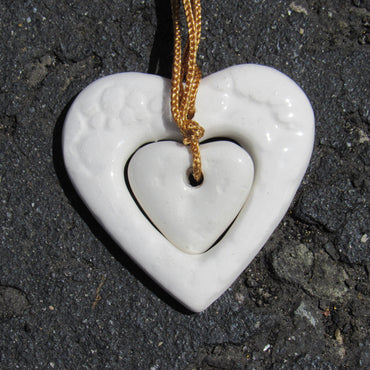
The
Remembering
Heart
Ask about
how we
can customize The Remembering Hearts for your
organization
|
$
5. 50 ea.
plus
shipping
|
|
ALSO AVAILABLE
|
The
Love Stone
$
1. 00 each
plus
shipping
minimum order (10)
|
| |
|
|
|
 |
|
Infant Urns.
Beautiful handcrafted urns to hold your baby's ashes.
Learn More
Here
|
| |
|
|
|
| |
|
|
|
|
|
|